
.jpg)
Servo & Stepper Motors
Servo and stepper motors are crucial components for applications requiring precision movement and accurate positioning control. They offer detailed specifications with phase configurations, amperage ratings, and stepping angles to ensure precise operation and reliable performance in various automated systems.
-
-
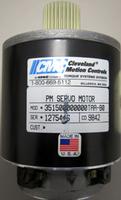
CMC 351500000000TAA-B0 PM Servo Motor
CMC 351500000000TAA-B0 PM Servo MotorPM Servo Motor
-
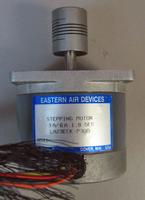
Eastern Air Devices LA23ECK-P300 Stepping Motor 3A/6A 1.8 Deg
Eastern Air Devices LA23ECK-P300 Stepping Motor 3A/6A 1.8 DegStepping Motor 3A/6A 1.8 Deg
-
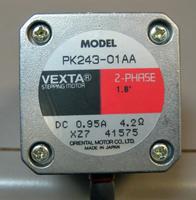
Oriental Motor Co. Vexta PK243-01AA 2 Phase Stepping Motor
Vexta PK243-01AA 2 Phase Stepping Motor
Popular Manufacturers
Common Applications
robotics
CNC machinery
automated systems
precision positioning
control systems
industrial automation
Frequently Asked Questions
What are the typical applications of servo and stepper motors?
Servo and stepper motors are commonly used in robotics, CNC machinery, and automated systems where precise movement and positioning are essential.
How does a stepping motor differ from a servo motor?
Stepping motors move in discrete steps with a defined stepping angle, whereas servo motors use feedback to provide continuous position control.
What are key specifications to consider in stepping motors?
Important specifications include the number of phases, amperage ratings, and stepping angle, which determine the motor's precision and operational efficiency.
Why is amperage important in choosing a motor?
Amperage determines the motor's power requirements and impacts its torque and efficiency, making it crucial for matching the motor to the application needs.
Log in with your username/email address