
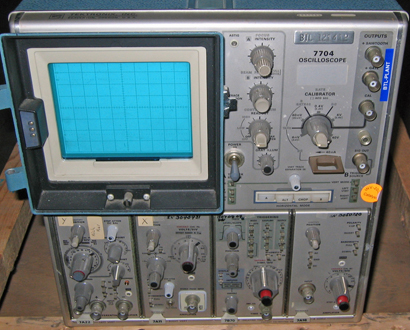
Oscilloscopes
Oscilloscopes are electronic devices that graphically display varying signal voltages, enabling waveform analysis. Essential for diagnosing circuit behavior, these devices support precision in voltage measurements up to 100 MHz with multimode channel support, ensuring high accuracy and reliability in performance analysis.
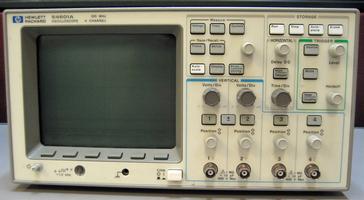

Popular Manufacturers
Common Applications
Waveform analysis
Signal characterization
Electronic troubleshooting
Circuit diagnostics
Educational purposes
Research and development
Frequently Asked Questions
What are the primary functions of an oscilloscope?
Oscilloscopes are used to observe the change of an electrical signal over time, providing a graphical representation of voltage versus time. They are instrumental in signal measurement, waveform analysis, and diagnosing circuit behaviors.
How does an oscilloscope measure voltage?
An oscilloscope measures voltage by displaying the input signal's waveform on its screen, allowing users to measure peak-to-peak voltage, frequency, and other signal characteristics with precision.
What specifications should I consider when selecting an oscilloscope?
Key specifications include bandwidth (up to 100 MHz), number of channels (typically 4), sample rate, voltage range, and whether the device supports advanced triggering functions and storage capabilities for waveform data.
Can oscilloscopes be used for frequency measurement?
Yes, oscilloscopes can measure frequency by interpreting the waveform's periodicity, which is the reciprocal of the time period shown in the waveform display.
Log in with your username/email address