Chillers

Chillers provide essential cooling solutions by recirculating chilled fluids to maintain stable temperatures in laboratory equipment. They support precision temperature control and energy efficiency with specifications like power ratings up to 5820W and water flow rates optimized for scientific applications.

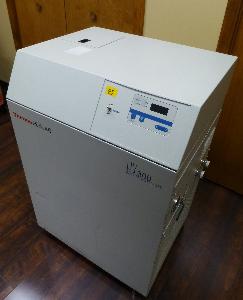
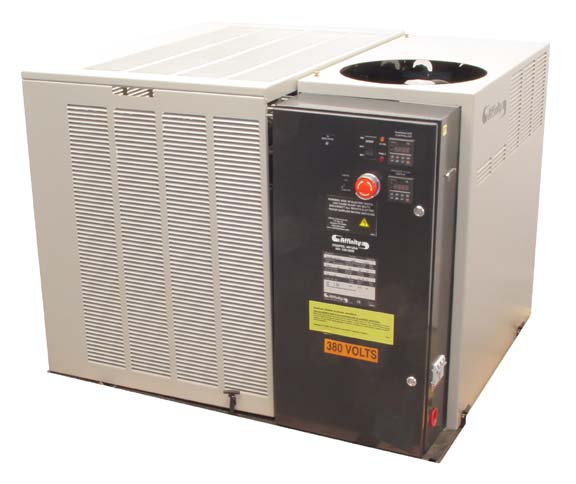
  1. Hyfra 5820W Air-Cooled Water Chiller

    Chillers

    Hyfra 5820W Air-Cooled Water Chiller

    • Hyfra is a subsidiary of Lennox International Inc. which is based in Richardson, TX.
    • This rugged chiller was specified for use with a Coborn PL4 diamond polishing bench. Other uses should be possible.
    • On-site testing at Cline Innovations should be possible, if warranted.

    Make: Hyfra-Pedia (Lennox

    Model: 5820W Air-Cooled

    1 unit @ Best Price

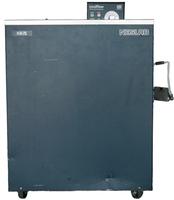
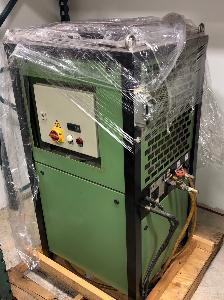
  2. Neslab HX-300 Water-Cooled Water Chiller

    Chillers

    Neslab HX-300 Water-Cooled Water Chiller

    • Compact water chiller equipped with a parallel-plate water-to-water heat exchanger.
    • Equipped with Model TU-5 recirculating pump.
    • Intended for use with 25 to 50 percent Glycol-in-Water mixtures only.

Common Applications

laboratory temperature control

equipment cooling

scientific research

industrial processes

Buying Guide

Chiller Buying Guide

Choosing the right chiller for your laboratory involves several considerations to ensure optimal performance and compatibility with your equipment.

Begin by evaluating your cooling requirements, including the specific temperature range and stability needed for your applications.

  • Assess the power rating and ensure it meets the thermal load demands of your equipment, with options available up to 5820W.
  • Determine whether an air-cooled or water-cooled model best suits your laboratory's infrastructure and cooling efficiency needs.
  • Verify the chiller's recirculating system specifications, including maximum flow rate and temperature control capabilities.
  • Consider additional features that may offer convenience, such as user-friendly controls, compact design, and low noise operation.

Frequently Asked Questions

What types of chillers are commonly used in laboratories?
Common types of chillers used in laboratories include recirculating water chillers and air-cooled chillers, which provide effective temperature control for various scientific instruments.
What is the importance of a chiller's power rating?
A chiller's power rating, which can reach up to 5820W, indicates its capacity to provide adequate cooling, ensuring efficient operation of laboratory equipment under specific thermal loads.
How does a recirculating water chiller work?
A recirculating water chiller works by continuously circulating chilled water or another coolant through a closed-loop system, keeping the connected equipment at a consistent temperature.
Why is temperature control critical in laboratories?
Temperature control is critical in laboratories to ensure the accuracy and reliability of experiments and processes, as deviations can lead to incorrect data and potential equipment damage.