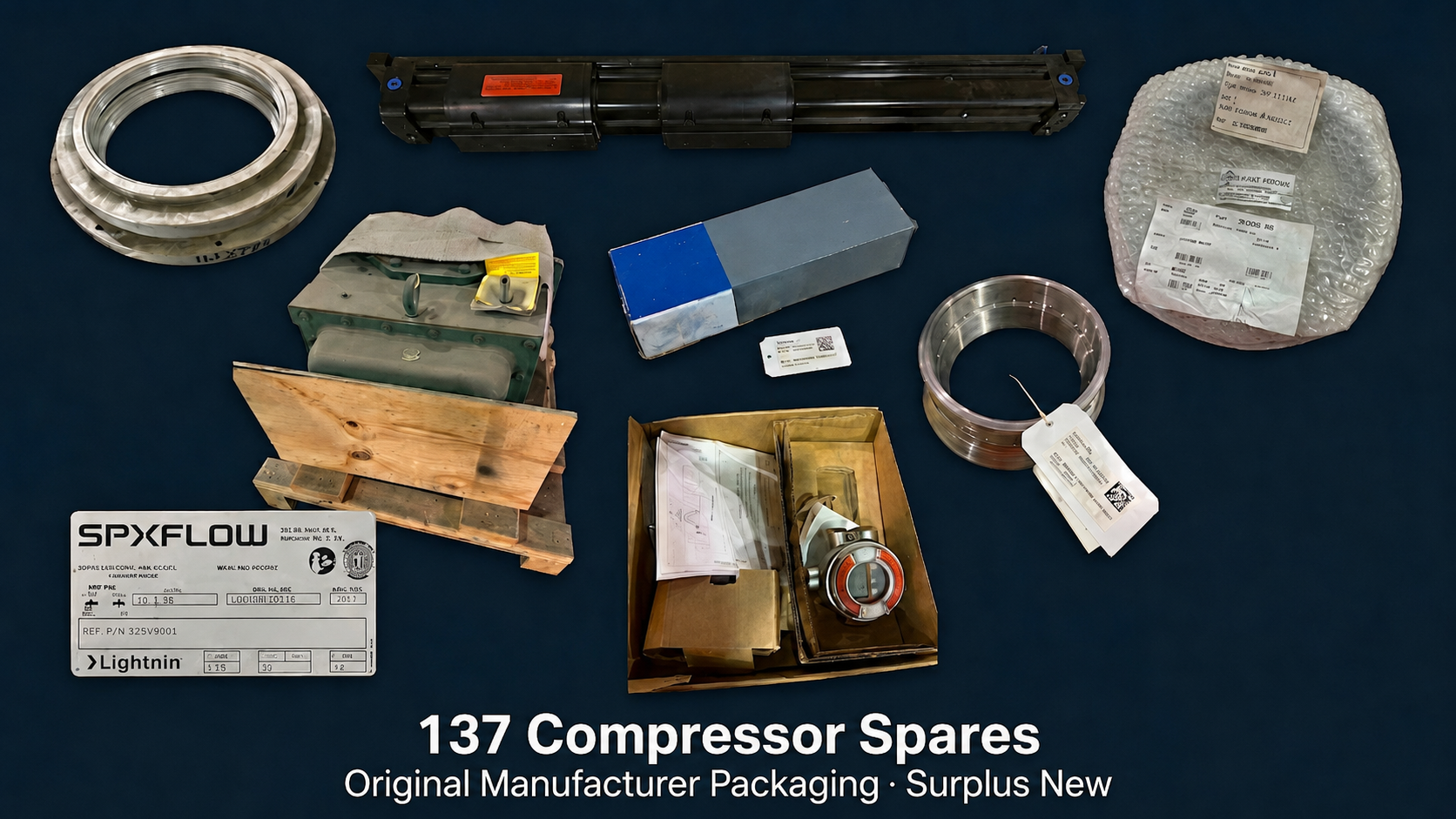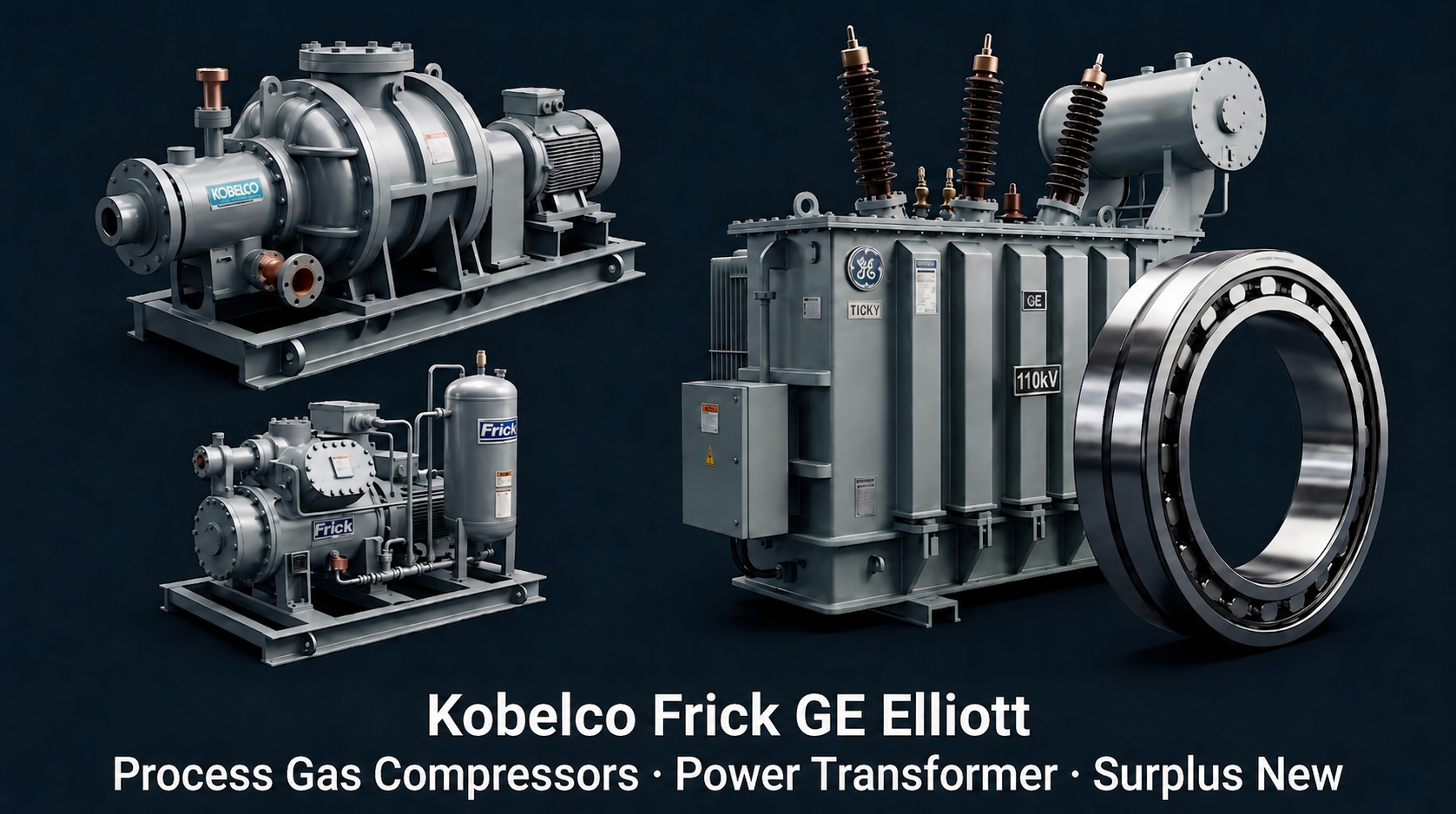
Kobelco Frick GE Elliott, 7 Items, Screw Compressors Transformer
Equipment brokers and specialty buyers in rotating machinery, transformer brokerage, and industrial refrigeration. Freight-heavy, high-unit-value lot - buyer will need to coordinate rigging and transportation.
Anchor items: - Kobelco KS-series screw compressor (1 unit) - Frick rotary screw compressor packages (2 units) - GE 110kV power transformer (1 unit) - Chromalox PCN326190 electric process heater (1 unit)
Supporting items: Applied Automation 2021905-001 instrument spare (1 unit), Elliott 853837-38 bearing (1 unit).
Full 7-item manifest attached.
How to bid: Use the Make Offer button to submit your bid for the complete lot. Bids are for the entire 7-item lot only, no partial-lot or per-item offers. The lot will be awarded to the strongest qualifying bid received by 2:00 PM CT on June 17, 2026, subject to seller’s review. Location: Baton Rouge, LA.
* Aggregate fair market retail value is an analytical estimate from the Dynaprice pricing engine against verified surplus comps. It is not a sale price, reserve, or appraisal, and is not a representation that any item will resell at the referenced level. ** Some packaging may show warehouse storage wear. *** Images are illustrative and actual-unit photos available on request.