
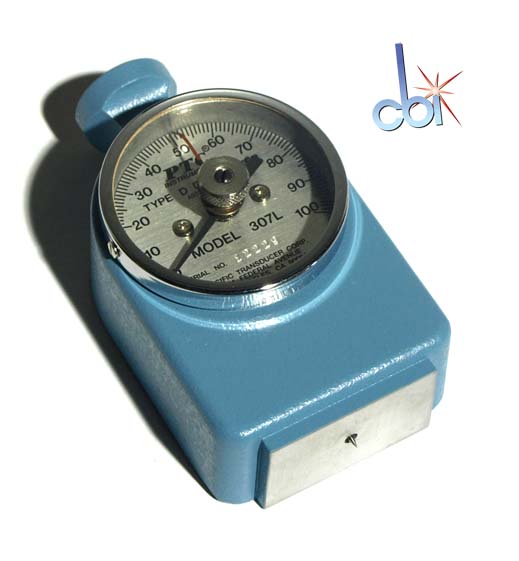
Hardness Testers
Hardness testers are instruments used to measure the resistance of materials to deformation, particularly indentation. They support precise measurement capabilities with specific parameters like Shore Type D scale, ensuring reliable results in material analysis.
Popular Manufacturers
Common Applications
material science
quality control
manufacturing
engineering analysis
Frequently Asked Questions
What is a Shore Type D durometer?
A Shore Type D durometer is a specific type of hardness tester used to measure the hardness of harder materials, typically using a pointed indenter.
How is hardness measured using a tester?
Hardness testers measure the depth or area of an indentation left by a specific indenter under a set force, providing values on scales such as Shore or Rockwell.
Are hardness testers applicable to all materials?
While hardness testers can assess a wide range of materials, specific types like Shore D are designed for harder substrates, whereas others are suitable for softer materials.
What industries commonly use hardness testers?
Hardness testers are widely used in industries involved in material science, engineering, quality control, and manufacturing to ensure material strength and durability.
Log in with your username/email address