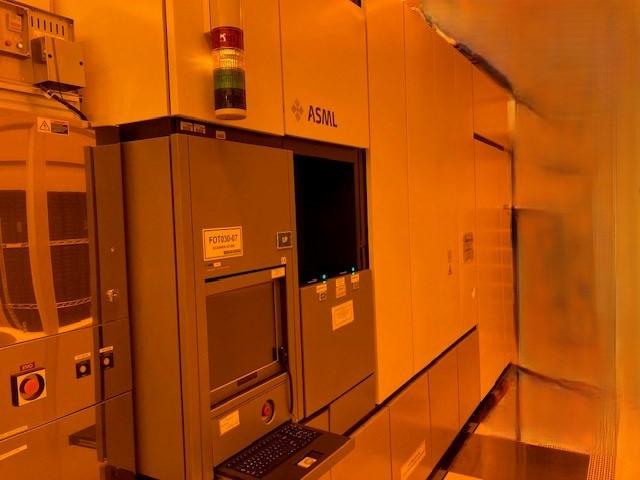
Other Lithography Exposure Tools

Lithography exposure tools are essential in semiconductor manufacturing for transferring intricate patterns onto substrates. These tools facilitate high-resolution patterning, offering precise alignment with specifications such as wavelength accuracy and exposure uniformity critical for microfabrication processes.

No products found in this category.

Common Applications

semiconductor device fabrication

microelectromechanical systems (MEMS)

photomask manufacturing

optical device production

printed circuit board patterning

nanostructure fabrication

Buying Guide

Other Lithography Exposure Tools Buying Guide

When selecting lithography exposure tools, consider the resolution and alignment precision necessary for your application. The wavelength accuracy and exposure uniformity are critical factors for ensuring consistent pattern quality.

Evaluate the tool's adaptability to different substrate sizes and materials, as this can impact production flexibility. Consider equipment that supports easy mask loading and alignment features for efficient operation.

  • Verify the resolution capabilities and mask alignment precision.
  • Check wavelength and exposure uniformity specifications for accuracy.
  • Consider substrate size compatibility and adaptability.
  • Ensure ease of use with user-friendly interfaces and automatic alignment systems.

Frequently Asked Questions

What are key features of lithography exposure tools?
Key features include high-resolution patterning, precise mask alignment, and control over wavelength accuracy and exposure uniformity.
How do lithography exposure tools aid semiconductor manufacturing?
They ensure precise pattern transfer onto substrates, which is essential for the fabrication of semiconductor devices with intricate designs.
What specifications are crucial for lithography tools?
Essential specifications include resolution, wavelength accuracy, exposure uniformity, and the substrate handling capabilities.
Can these tools be used for non-semiconductor applications?
While primarily used for semiconductor manufacturing, they can also apply in microfabrication fields requiring precise patterning.