
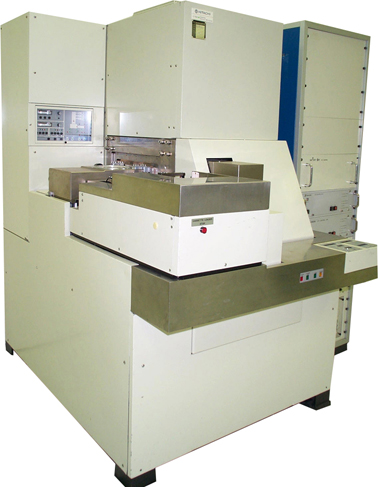
Critical Dimension Scanning Electron Microscopes
Critical Dimension Scanning Electron Microscopes (CD-SEMs) are used for high-resolution imaging and precise measurement of microscopic features. They enable traceable metrology with nanometer-scale resolution by utilizing electron beam technology, offering specifications such as acceleration voltage ranges and vacuum pressure levels to achieve accurate imaging.
Popular Manufacturers
Common Applications
nanometrology
semiconductor manufacturing
materials science research
quality control in electronics
nanostructure analysis
precision instrument development
Frequently Asked Questions
What is the resolution capability of a CD-SEM?
CD-SEMs can achieve resolution at the nanometer scale, often reaching sub-nanometer levels depending on the model and specifications.
How do CD-SEMs measure critical dimensions?
CD-SEMs use electron beam scanning to produce high-resolution images, allowing for precise measurement of feature dimensions down to nanometer scales.
What are the typical specifications of a CD-SEM?
Typical specifications include high acceleration voltage ranges, precise aperture control, and variable vacuum pressure settings for optimal imaging performance.
Why is traceability important in CD-SEM measurements?
Traceability ensures the accuracy and reliability of measurements, which is crucial for applications requiring exact compliance with precision standards.
Log in with your username/email address