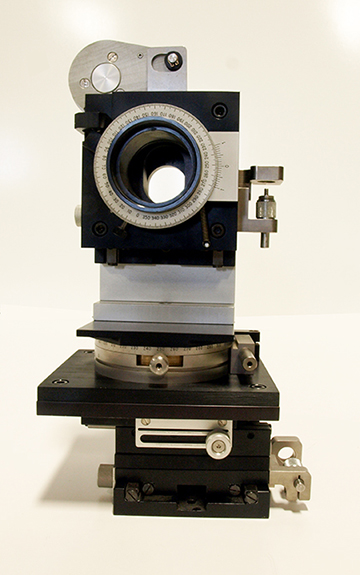
Rotary Stages

Rotary stages provide precise angular positioning in scientific and industrial applications, enhancing alignment accuracy. They enable precise control with specifications such as balanced Z-axis, allowing for repeatable movement and high-resolution measurement capabilities.

  1. BURLEIGH XYZ ROTARY WITH Z AXIS BALANCED ROTARY STAGE

    Other Stages

    BURLEIGH XYZ ROTARY WITH Z AXIS BALANCED ROTARY STAGE

    XYZ Rotary With Z Axis Balanced Rotary Stage

Common Applications

precision alignment

angular positioning

photonics experiments

optical inspections

mechanical testing

Buying Guide

Rotary Stages Buying Guide

When selecting a rotary stage, the primary consideration is the precision and repeatability required for your application. Ensure the stage offers the necessary resolution and angular positioning accuracy.

It's crucial to verify the balance of the Z-axis, as it can significantly affect the stability and measurement consistency. Consider the stage's compatibility with other equipment in your setup, and check for any additional features that may enhance your specific use case.

  • Assess the resolution and repeatability specifications.
  • Verify the Z-axis balance for stable alignments.
  • Check for compatibility with existing systems.
  • Evaluate additional features for enhanced functionality.

Frequently Asked Questions

What are the key specifications of rotary stages?
Rotary stages feature specifications like balanced Z-axis, high-resolution angular positioning, and repeatable movement to ensure precise alignment in various applications.
How do rotary stages enhance measurement accuracy?
Rotary stages improve measurement accuracy by providing precise angular positioning and repeatability, crucial for high-precision research and industrial tasks.
What applications benefit from rotary stages?
Rotary stages are beneficial in applications requiring precise alignment and positioning, such as photonics experiments, optical inspections, and mechanical testing.
What is the importance of Z-axis balance in rotary stages?
A balanced Z-axis in rotary stages ensures stability and accurate angular adjustments, reducing errors in positioning critical for precise measurements.