
Oscilloscopes
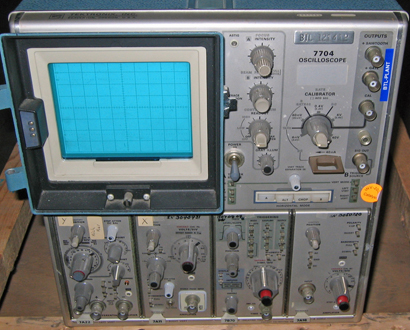
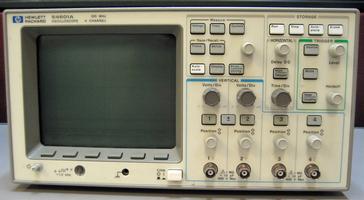
Oscilloscopes are essential instruments for visualizing and analyzing electrical signal waveforms. These devices support precise measurement capabilities with specifications such as bandwidths up to 100 MHz and multi-channel operation, ensuring accurate traceability in signal diagnostics.

Popular Manufacturers
Common Applications
waveform analysis
signal diagnostics
electronics testing
laboratory research
Frequently Asked Questions
What are the main features to consider in an oscilloscope?
Key features include bandwidth, the number of channels, sampling rate, and memory depth. Oscilloscopes with higher bandwidth, such as up to 100 MHz, are better suited for analyzing faster signals.
How does bandwidth affect oscilloscope performance?
Bandwidth determines the range of frequencies the oscilloscope can accurately measure. A 100 MHz bandwidth allows the capture of higher frequency signals necessary for detailed analysis.
Why is the number of channels important in oscilloscopes?
The number of channels affects the oscilloscope's ability to analyze multiple signals simultaneously. For complex diagnostics, a four-channel oscilloscope provides greater flexibility.
What is the role of sampling rate in an oscilloscope?
Sampling rate defines how often the oscilloscope collects data points of the signal. A higher sampling rate provides more detailed waveform reconstruction, critical for precise measurements.
Log in with your username/email address